The neighbourhood
Kabukichō for visitors
Where Shinjuku's Kabukichō got its name from a kabuki theatre that was never built, what the area is like and how to walk it sensibly on the way to a show.
Book the ninja stage show ↗Quick answer
Kabukichō is an entertainment district in Shinjuku, Tokyo, about 36 hectares in size. Its name comes from a late-1940s plan for a kabuki theatre that was cancelled for financial reasons while the name stayed. Wikipedia calls it a red-light district, and it also holds shops, restaurants, cinemas and venues such as the one that stages the ninja show.
A name from a theatre that was never built
Wikipedia says the name comes from late-1940s plans for a kabuki theatre, and that a planner called the town Kabukichō, a name adopted on 1 April 1948. The planned theatre, the Kiku-za, was never built. Although it was cancelled because of financial problems, the name remained. The name therefore records an intention and not a building. For classical kabuki the place to go is the Kabuki-za in Ginza.
Read next: Kabuki for first-timers
Where it is
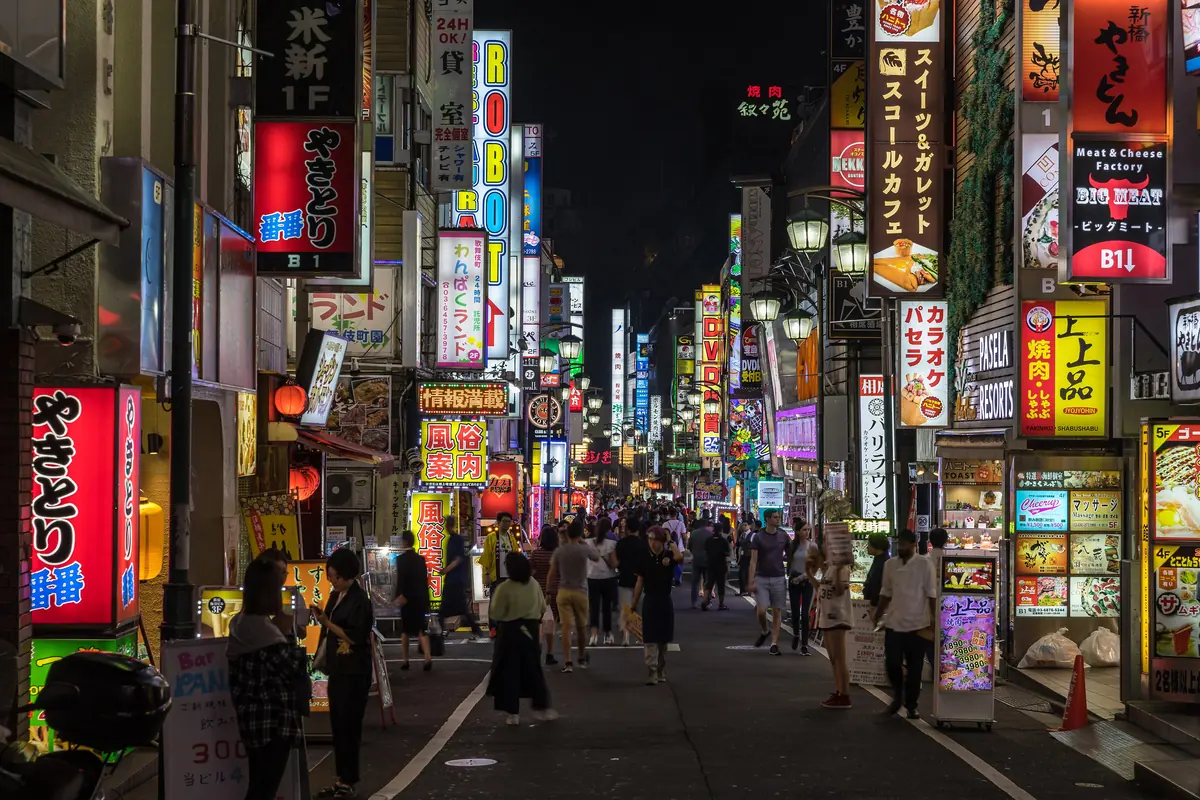
Wikipedia gives the area as 36 hectares, generally bounded by railroad tracks on the west, Yasukuni-dōri on the south, Meiji-dōri on the east and Shokuan-dōri on the north. It lies near Shinjuku Station and Seibu-Shinjuku Station and contains part of Shinjuku Golden Gai. The red Kabukichō Ichibangai gate near the southwest corner, on Yasukuni-dōri, is often photographed as the main entrance.
The Godzilla Head
Wikipedia says a life-size replica of Godzilla, from the neck up, was added to an outdoor terrace of the Toho Shinjuku Building, completed in 2014, in 2015, and that it has since become a local landmark. The show's own site places the venue next to it, which makes the head a simple way to find your bearings when you are looking for the entrance. The show's site gives walking times of 8 minutes from the East Exit of JR Shinjuku Station and 5 minutes from the main entrance of Seibu-Shinjuku Station, and SoraNews24 reported that the show opened at WARP SHINJUKU in August 2024. Treat the walking times as the site's own estimate and add a few minutes for crowds and crossings.
Finding the venue
Because the district is dense with signs, give yourself a landmark and a building name. Enter the building named on your confirmation and head for the basement floor, where the show's site places the venue. The ticket description names the building Daini Tōa Kaikan, and the address is 1-21-1 Kabukichō. Once inside, go to reception, where number tags are handed out in the order guests arrive and staff guide you to your seat by number.
What the area is
Wikipedia says Kabukichō is considered a red-light district and is often called the Sleepless Town. Its businesses include host and hostess clubs, love hotels, shops, restaurants and nightclubs. It also includes the Toho Shinjuku Building, completed in 2014. The ninja show is one of the entertainment businesses on the street, and arriving for a show is an ordinary reason to be there, as it is for many people who live and work in Shinjuku. The district rewards a plan: know the name of your venue, know where its entrance is, and leave yourself time before showtime so that you are not hunting for it among identical signs.
Staying out of trouble
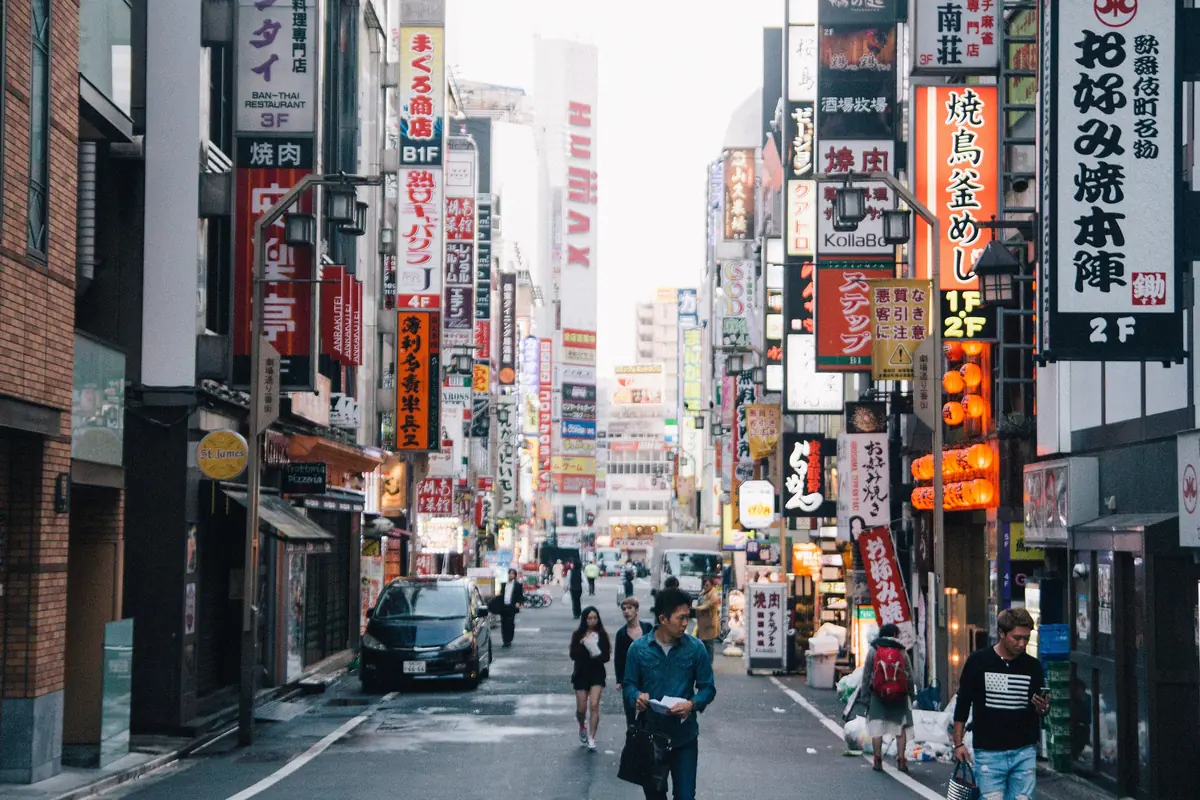
Wikipedia describes bottakuri, a practice in which some businesses add hidden fees that push the final bill far above the advertised price, and says the Kabukicho Concierge Association was formed to recommend businesses that would be safe for foreign patrons. The practical advice follows from that: go to the venue with your booking confirmation, decline street invitations to bars, and do not follow anyone indoors to settle a price afterwards.
Who this isn't for
This guide is not a nightlife guide. It will not tell you which bar to enter, and it does not recommend any business in the district. If your only reason for being in Kabukichō is a show, the sensible plan is to arrive in good time, go straight to the venue and make any evening plans somewhere you have chosen in advance.
Frequently asked questions
Why is it called Kabukichō?
From a late-1940s plan for a kabuki theatre, the Kiku-za. The theatre was cancelled for financial reasons, but the name was adopted on 1 April 1948 and stayed.
Where do I see classical kabuki?
Wikipedia calls the Kabuki-za in Ginza the principal theatre in Tokyo for traditional kabuki. The planned Kabukichō theatre was never built.
How big is Kabukichō?
Wikipedia gives its area as 36 hectares.
What is the Godzilla Head?
A life-size replica from the neck up on a terrace of the Toho Shinjuku Building, added in 2015 and now a local landmark.
What should I watch for?
Hidden fees. Wikipedia describes bottakuri, where some businesses add charges that push a bill far above the advertised price.
Sources